
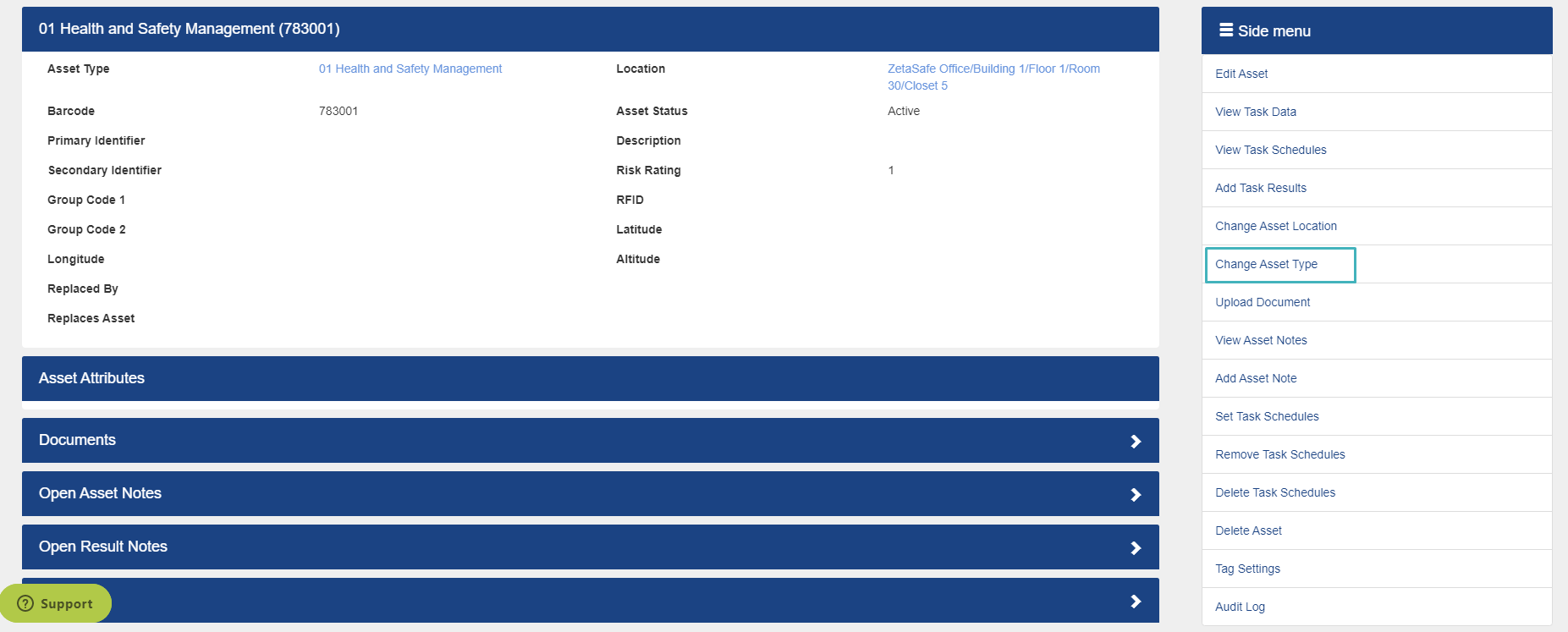
It is not always the case that assets are added with the correct asset type, indeed over time an asset may be upgraded or changed in some way which means the battery of tests applied to it also need to change.
For example, the hot water outlet on a sink may subsequently have a TMV fitted, the TMV has more tasks but includes those done on the old standard outlet. It might make sense to change the 'old' hot water outlet asset to a TMV asset, rather than adding the TMV as a separate asset and doubling up on some task results like outlet temperature.
When an asset changes type both assets receive a reciprocal link, so although the data from both assets is not visible in a single list, both old and new data lists are easily accessible. Changing the type of an asset also only consumes one licence, adding a second asset (eg. deactivating an asset and adding a second version) would consume two licences making Change Asset Type an economical way to keep your recorded data-efficient and current to requirements.
Comments
0 comments
Article is closed for comments.